Parking Structures & Buildings
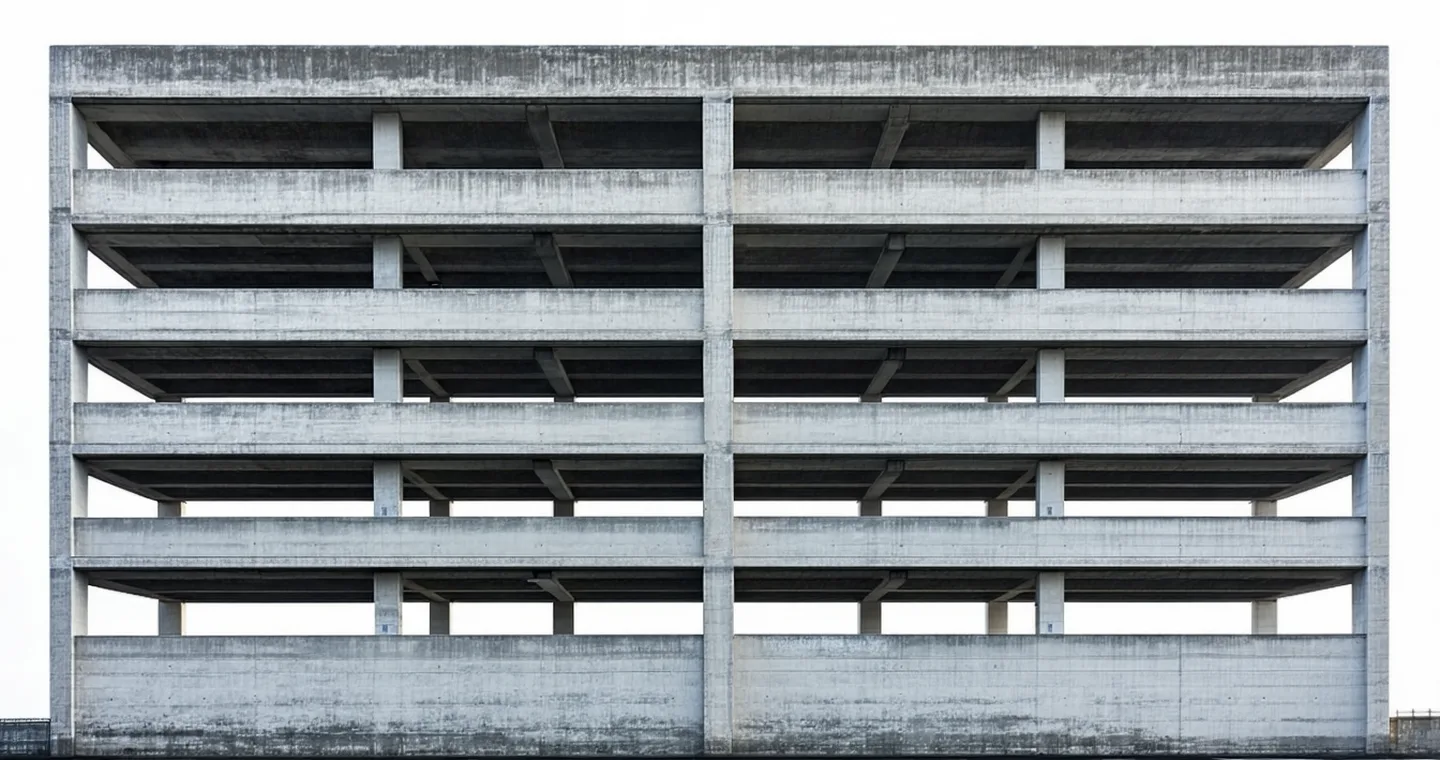
Commercial concrete structures — particularly parking garages — are among the highest-lifecycle-cost concrete assets per square metre. Freeze-thaw cycling, de-icing chemicals, and drainage water create ideal conditions for both GX self-healing activation and maximum repair avoidance value.
High lifecycle cost per m²
Parking structures face concentrated salt loading from vehicles in winter, combined with high thermal mass that accelerates freeze-thaw cycles in the slab. Deck joint failure and surface spalling are recurring costs for parking structure owners — with each repair cycle costing more as the structure ages and access becomes more complex.
Fewer repair mobilizations
GX Mortar Series in joint repair applications seals recurring joint failure autonomously on re-activation from seasonal moisture. GX Concrete Series in the deck slab targets surface crack management before chloride reach reinforcement. Both pathways reduce the number of repair mobilizations over the building's service life.
Parking Structure Decks
GX-40 recommended for parking decks — high-chloride, high-freeze-thaw exposure class. Autonomous sealing targets hairline to 0.4mm surface cracks before de-icing salt migration to the reinforcement level.
Building Envelope
Concrete cladding panels and precast building envelope elements. GX-30 for typical exposure classes — the lower clinker replacement level maintains adequate early strength for handling and erection while providing the healing matrix for post-installation crack management.
Ground-Floor Slabs
Retail and commercial ground-floor slabs subject to forklift and vehicle loading. Shrinkage cracks at control joint edges are the primary target for GX mortar infill — autonomous re-sealing reduces the visible deterioration cycle.
Masonry Façades
GXM-S mortar in masonry façade repointing — the most frequently specified mortar repair application in commercial buildings. GX healing chemistry targets re-activation in the seasonal wet-dry cycles that cause standard repointing mortar to fail.
Urban mixed-use developer — 800-space parking structure, exposed upper decks
An urban mixed-use developer incorporating GX Mortar Series and GX-40 Concrete Series in the joint and deck repair programme of an 800-space parking structure. The two exposed upper levels had been on an annual epoxy injection maintenance programme for the preceding 8 years — the developer's facilities team wanted to break the cycle rather than manage it. GX-40 is specified for the deck slab pours on the replacement sections; GXM-S is the joint repair mortar throughout. The basis: specification writers for both the concrete and mortar work used Gelmedix TDS parameters and CSI model section language. The 3-year monitoring programme tracks crack width frequency distribution and chloride reach on both decks.
Synthetic illustrative pilot program. Not based on a real developer or project. Performance data is not yet available.