Concrete that heals itself. Half the carbon.
Gelmedix engineers self-healing concrete and low-carbon mortars that seal their own cracks and cut embodied CO2 by up to half — so your infrastructure serves its full design life without seasonal repair cycles.
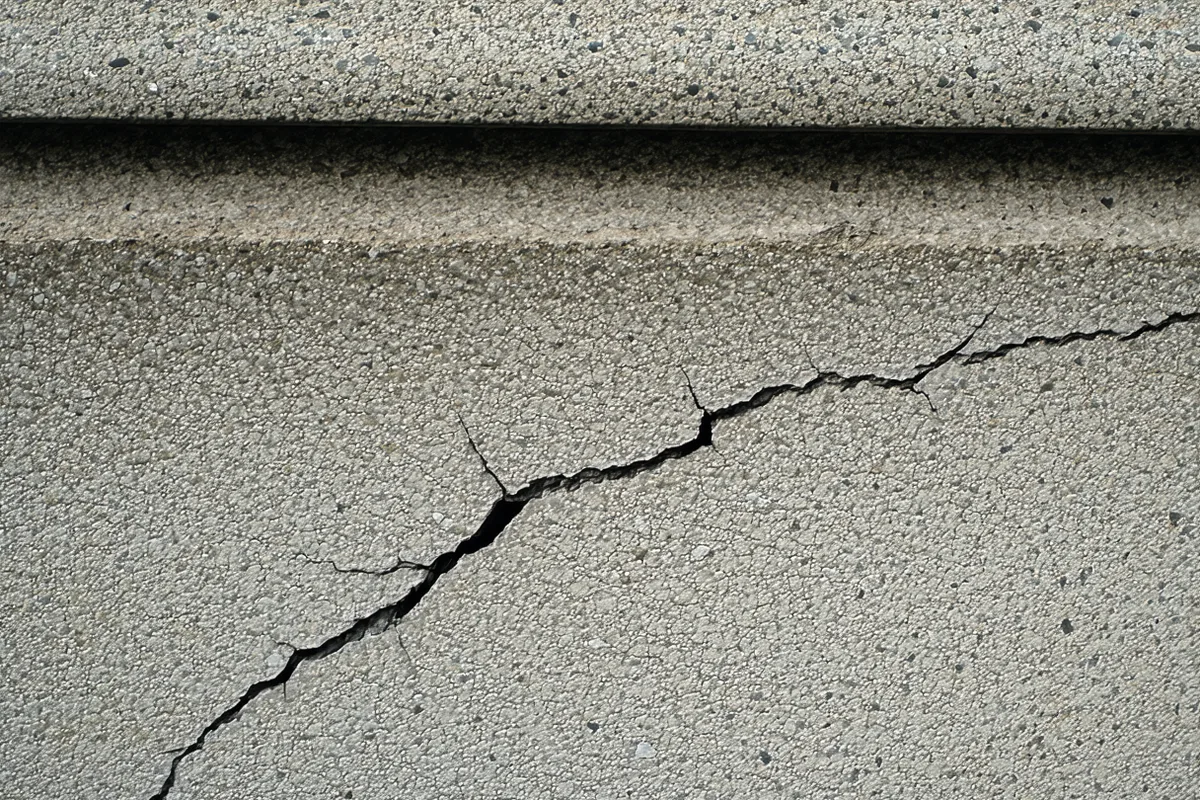
The $40B crack problem
Concrete cracking is not a failure mode — it is an expected behaviour built into every design. But the mobilization cycle that follows each winter is where infrastructure budgets go. Each repair requires crews, equipment, traffic management, and carbon-intensive material re-pours. None of that restores the value lost in the original pour.
Infrastructure owners face a compounding problem: repair costs escalate while service life shortens. Bridges, tunnels, and parking structures designed for 50-year lifespans are entering major intervention cycles at 15–20 years because micro-cracking allows chloride ingress, freeze-thaw cycles complete the damage, and patch repairs fail in the same conditions that caused the original crack.
Infrastructure cost estimates derived from ASCE Infrastructure Report Card context — illustrative order-of-magnitude framing.
Three stages. One autonomous system.
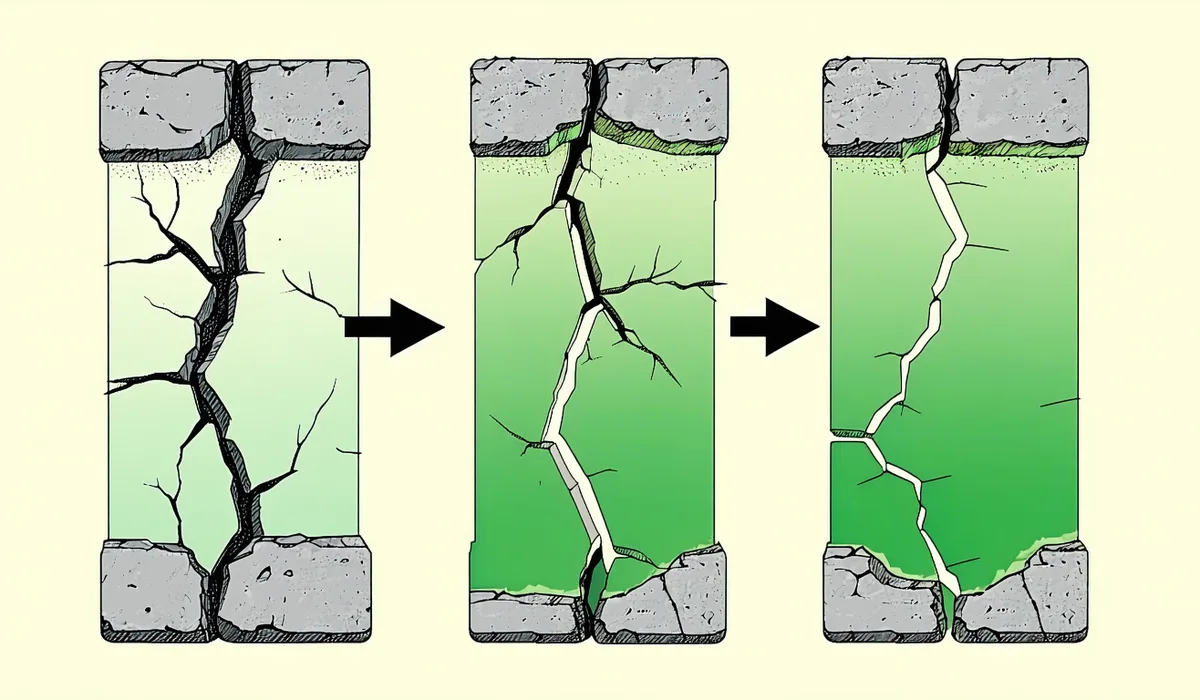
The GX healing matrix is activated by moisture — no external intervention, no monitoring required.
Micro-crack forms
Thermal cycling, load stress, or shrinkage opens a hairline crack. The crack network propagates into the pre-placed healing matrix zone embedded in the concrete mix.
Healing agent activates
Moisture contact triggers a gel-forming polymerisation reaction within the crack channel. The gel begins to fill the void from the crack walls inward, swelling to fill the available space.
Crack seals — integrity restored
Within the design target window, the crack is bridged by the hardened gel matrix. Structural load paths are re-established. The process can repeat over the service life of the element.
Two materials. One design philosophy.
GX Concrete Series
Self-healing ready-mix and precast concrete formulations for structural applications: bridge decks, parking slabs, retaining walls, and tunnel linings. Designed to target ASTM C94 compliance ranges while incorporating the gel healing matrix throughout the matrix.
View ProductGX Mortar Series
Low-carbon repair mortars and masonry bed mortars that combine supplementary cementitious materials (SCMs) with the GX healing additive. Designed for joint repair, masonry rehabilitation, and surface-applied maintenance applications.
View ProductWhere GX materials perform
From bridge decks to chemical containment, GX systems are designed for environments where conventional concrete requires the most frequent repair intervention.
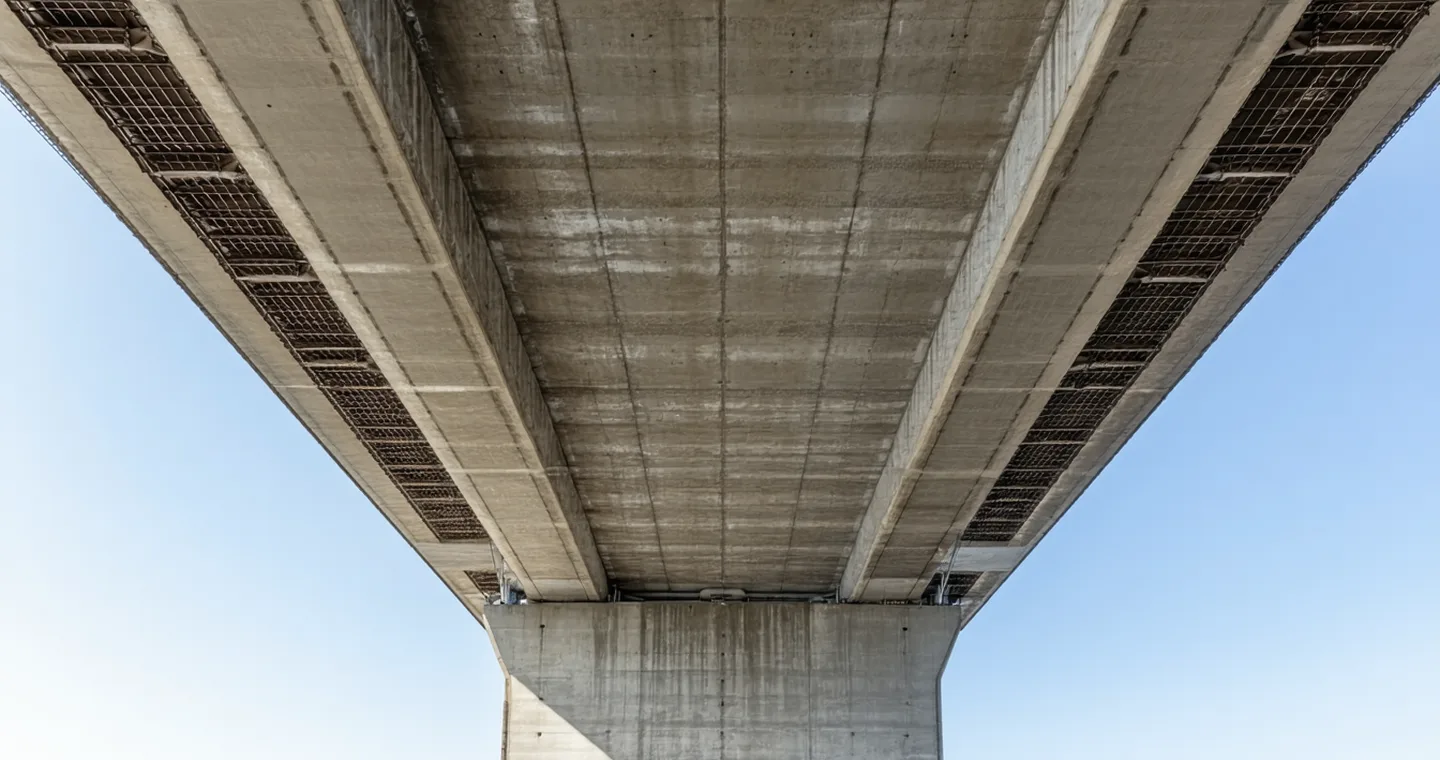
Bridges & Tunnels
Bridge decks, abutments, retaining walls, and tunnel lining segments — high-chloride, high-cycle environments where autonomous healing delivers the greatest lifecycle benefit.
Learn more →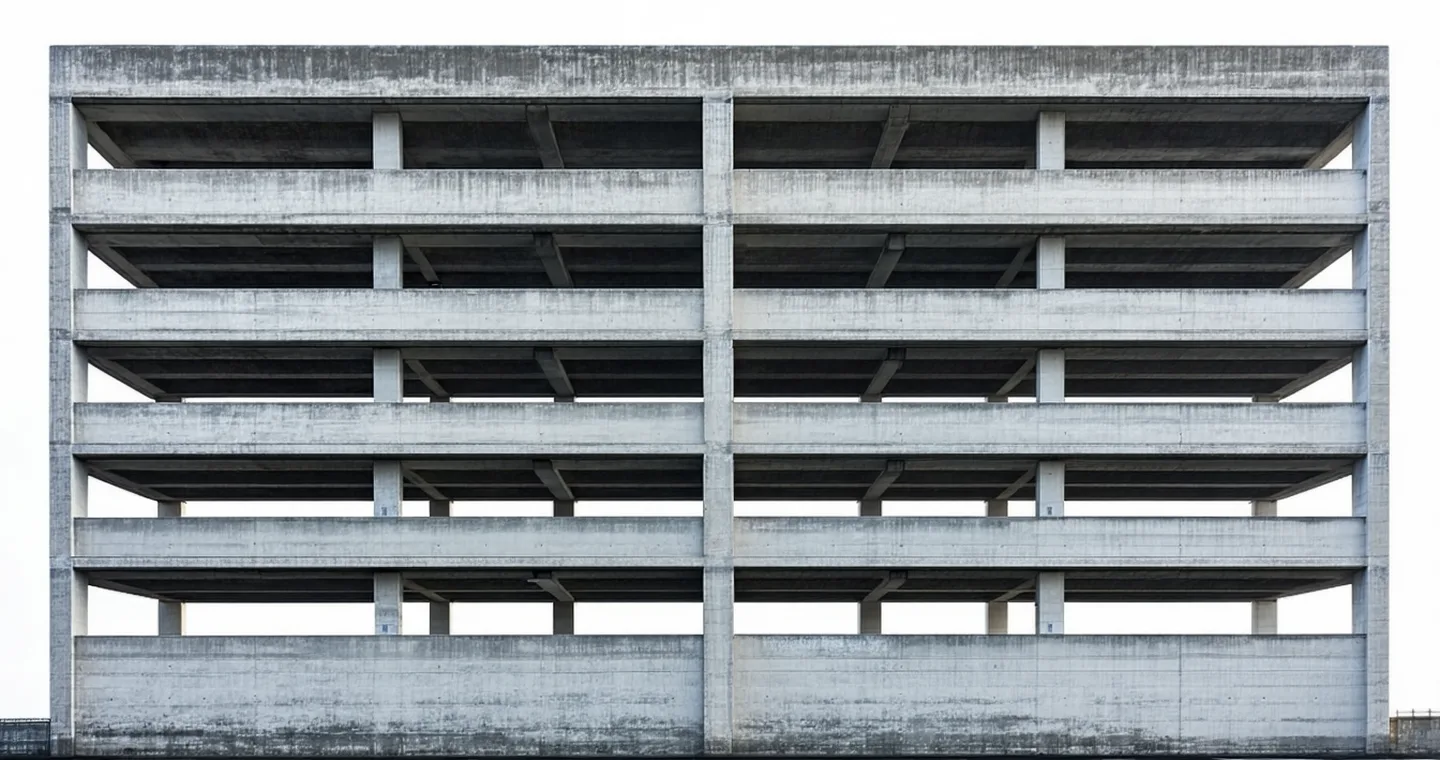
Parking & Buildings
Parking structures, building envelopes, and ground-floor slabs. High freeze-thaw and de-icing salt exposure creates ideal conditions for GX healing chemistry.
Learn more →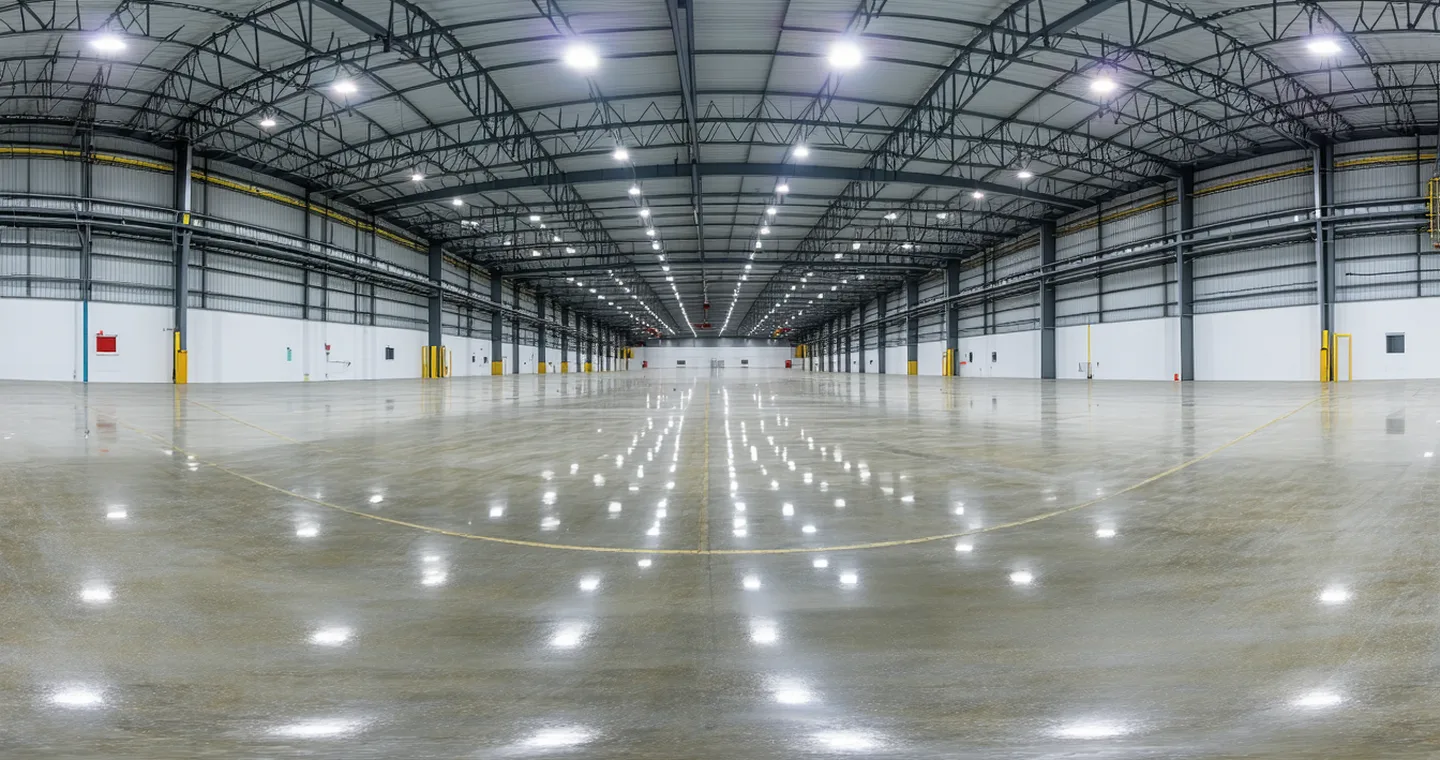
Industrial Facilities
Secondary containment structures, chemical plant floors, and water treatment infrastructure — applications where crack integrity is a regulatory and safety requirement.
Learn more →Designing for lower embodied carbon.
Concrete accounts for approximately 8% of global CO2 emissions. A significant share comes not from the initial pour, but from the repair cycle: replacement material, mobilization, and equipment emissions that repeat every 10–15 years on aging infrastructure.
GX materials reduce carbon on two independent pathways: the low-clinker formulation cuts embodied CO2 at the point of production, and the self-healing mechanism reduces the frequency of carbon-intensive repair mobilizations over the structure's service life.
See Our Sustainability ApproachConfidence in specification
"We had been writing epoxy injection repair cycles into the 25-year maintenance schedule as a given. The prospect of specifying a concrete that targets autonomous sealing before the crack reaches the reinforcement level — and carries a documented embodied CO2 reduction — changed how we framed the whole deck replacement brief."
"The specification language matters as much as the chemistry. Gelmedix provides defined performance targets — target crack width range, activation window, compliance-targeting standard references — so we can write a proper CSI section rather than a proprietary product name. That is the only basis on which we specify new materials."
Ready to specify self-healing concrete?
Our technical team supports specification from first enquiry through mix design parameters, placement guidelines, exposure class selection, and CSI MasterFormat documentation — all without an epoxy injection call-out in the 25-year maintenance programme.