Bridges & Tunnels
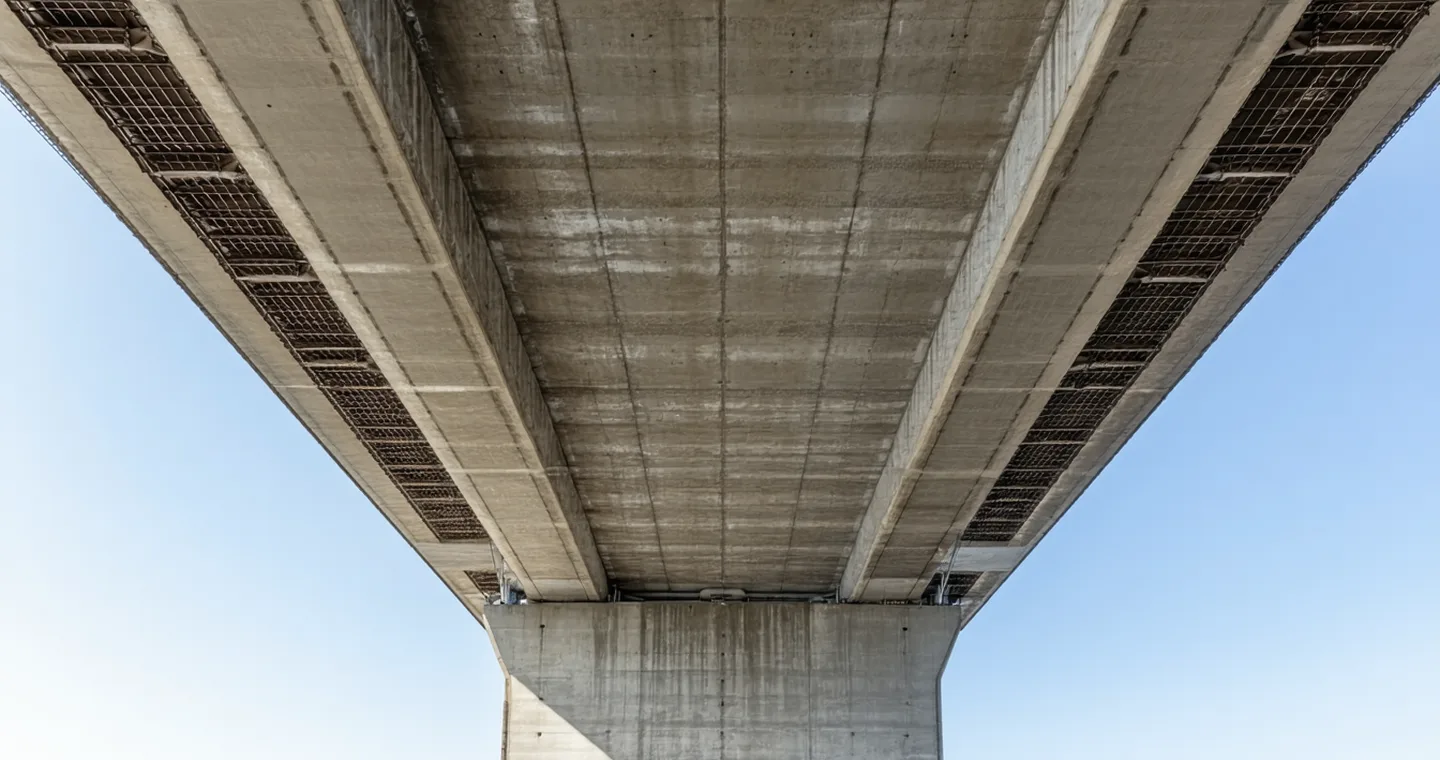
Infrastructure concrete faces the most demanding combination of exposures: chloride from de-icing salts and marine environments, thermal cycling from seasonal temperature swings, and fatigue loading from decades of traffic. GX systems are designed for these conditions.
Chloride-driven deterioration
Bridge deck concrete cracks under thermal and traffic loads within the first 5–10 years of service. Once cracked, chloride-laden surface water migrates to the reinforcement level, initiating corrosion that expands the crack, accelerates spalling, and demands costly intervention — lane closures, traffic management, and material replacement.
Autonomous closure before ingress
GX Concrete Series targets activation in the crack width range 0.05–0.40 mm — the range at which chloride ingress begins to accelerate. By targeting autonomous sealing before the crack reaches the reinforcement exposure threshold, GX is designed to extend the inspection and intervention interval significantly.
Bridge Decks
Cast-in-place and precast deck panel applications. Recommended GX grade: GX-40 or GX-50 for high-chloride XD3/F2 exposure classes. Target crack width range covers thermal, shrinkage, and traffic-induced cracking.
Tunnel Linings
Segmental and cast-in-situ tunnel linings subject to groundwater pressure and minor seismic movement. GX gel-phase sets under wet conditions — designed for use in permanently wet tunnel environments.
Retaining Walls
Cantilever, counterfort, and MSE-type retaining wall facing concrete. Pressure-face cracking from soil movement and drainage can be addressed by GX healing chemistry at the point of crack initiation.
Highway Infrastructure
Overhead sign structures, bridge piers, abutment wing walls, and approach slabs — elements that are structurally critical but difficult to access for maintenance. GX systems reduce the frequency of required access for crack assessment and repair.
Regional bridge authority — 200m cast-in-place deck replacement
A regional infrastructure authority piloting GX-40 Concrete Series on a 200-metre cast-in-place bridge deck replacement section in a high-chloride coastal corridor. The deck had undergone two epoxy injection repair cycles in its prior service period. The GX specification was written as a performance-based addition to the host C94 ready-mix design — the contractor used their existing batch plant with GX dry admixture supplied per the TDS dosage parameters. Monitoring protocol: crack width mapping at 6-month intervals over 36 months, with parallel chloride profiling at the reinforcement depth. Early-term crack width distribution data is under collection.
Synthetic illustrative pilot program. Not based on an identified real authority, bridge, or project. Performance data is not yet available.