Specifying Self-Healing Concrete for Bridge Decks: A Practical Guide for Engineers
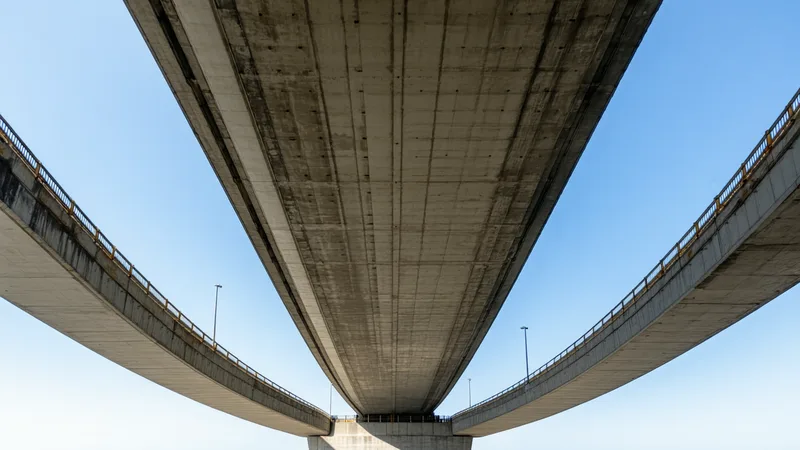
Bridge decks sit at the intersection of the most demanding conditions concrete encounters in service: sustained traffic loading that generates fatigue-inducing tensile stress in the deck slab, temperature differentials of 30–50°C between winter and summer extremes (and intraday gradients across deck thickness), sustained chloride exposure from deicing salts or marine environments, and a drainage geometry that concentrates water and chloride at joints and low points. Writing a specification for self-healing concrete in this context requires more than selecting a product — it requires understanding which performance properties matter most for this specific environment and how to verify them at acceptance.
Understanding the Deck's Critical Failure Pathway
Bridge deck deterioration follows a well-characterized sequence in chloride-exposure environments. Transverse cracking — driven by restrained shrinkage, negative moment over interior supports, and thermal gradient — creates the primary chloride ingress pathway. Once chlorides reach rebar depth and exceed depassivation thresholds (commonly on the order of 0.4% by weight of cement for mild carbon steel), the corrosion-spalling cascade begins. The deck's rated service life in a Northern US chloride environment is often limited not by structural capacity but by the rate at which this corrosion-spalling cycle advances.
Self-healing chemistry targets the early stages of this pathway by closing cracks before they serve as sustained ingress channels. The specification objective, therefore, is not crack elimination — that is not achievable by chemistry alone — but chloride ingress rate reduction by maintaining effective crack sealing under the load cycling and moisture cycling the deck will actually experience.
Exposure Class and Baseline Mix Requirements
Start with ACI 318 Table 19.3.3 and AASHTO LRFD Section 5 exposure class requirements, which for bridge decks in deicing salt environments typically point to Class W2 (exposure to water and deicing chemicals), requiring water-to-cementitious-materials ratios no greater than 0.40 and minimum concrete compressive strength of 35 MPa (5000 psi). These are floor requirements, not ceilings. Many DOT standard specifications for bridge decks in cold climate states tighten to w/cm ≤ 0.38 and fc' ≥ 41 MPa, with air entrainment at 5.5–7.5% for freeze-thaw durability.
Self-healing chemistry should be specified as an admixture addition to a base mix that already meets these exposure class requirements. Specifying self-healing as a substitute for proper w/cm control or adequate air entrainment would be technically unsound — the mechanisms operate at different scales and in different performance regimes. The durability value of self-healing is additive to a properly designed base mix, not a replacement for one.
Specifying Healing Performance: What to Ask For
The challenge in writing a self-healing specification is that ASTM has not yet published a standardized test method for autonomous healing assessment in concrete elements (the RILEM Technical Committee TC 221-SHC published recommendations for crack healing assessment in 2013, and ASTM committee C09 has ongoing activity in this space, but a codified standard test for specification compliance has not been finalized as of mid-2025). This puts bridge engineers in the position of specifying performance criteria using methods that may not yet have universal acceptance.
A practical approach: specify healing performance as a permeability recovery criterion rather than a visual or structural criterion. Crack sealing that reduces water permeability through a cracked section by a defined percentage after conditioning under specified moisture exposure cycles is an outcome-oriented metric that connects directly to the durability performance goal. For gel-matrix systems, conditioning protocols that include moisture/dry cycling and temperature cycling are more appropriate than static wet storage tests, since the gel-swelling mechanism activates under cyclic moisture conditions.
When requesting submittals, ask for third-party laboratory test data using conditioning protocols consistent with RILEM TC 221-SHC recommendations, with specimens prepared using the project's target mix composition. Manufacturer-provided data using proprietary protocols is a starting point for evaluation, not a specification compliance document.
Scenario: A Two-Span Steel-Concrete Composite Deck Rehabilitation
Consider a plausible scenario faced by a mid-size state DOT: a two-span composite steel-concrete bridge deck built in the late 1980s, originally specified to ACI 318-83 requirements, showing widespread transverse cracking at inspection with chloride concentrations at shallow cover depths exceeding warning thresholds. Rather than full deck replacement (estimated at $2.4–3.2M for this deck configuration), the DOT is evaluating an overlay strategy using a self-healing low-carbon mortar over a prepared existing deck, combined with a partial selective depth repair of the most deteriorated areas.
The critical specification questions for this scenario are different from a new-construction deck. The overlay needs sufficient bond strength to the substrate concrete (ICRI CSP profiles, minimum pull-off strength requirements), appropriate coefficient of thermal expansion to minimize differential thermal strain between overlay and substrate, and a crack healing mechanism that activates at the overlay thickness — typically 38–50 mm — where the overlay itself is most vulnerable to reflective cracking from substrate movement. Gel-matrix chemistry is formulated to be effective at these thicknesses, but the specification should confirm that laboratory conditioning was performed on specimens at representative section thickness, not on standard 75mm or 100mm cubes that may not reflect the thermal and moisture gradients in the overlay profile.
Admixture Compatibility and Mix Design Submissions
For gel-matrix self-healing admixtures, compatibility with the standard admixture suite used in bridge deck mixes is a routine but necessary verification item. The typical bridge deck mix uses a mid-range or high-range water reducer (ASTM C494 Types A, F, or G), an air-entraining admixture (ASTM C260), and sometimes an accelerator for cold-weather placements or a viscosity-modifying agent for pumped applications. Confirm that the self-healing admixture has been tested in combination with the specific admixture types planned for the project, not just with individual admixtures in isolation — interaction effects between admixtures are not always predictable from single-admixture test data.
Pre-bid submittals should include: admixture technical data sheet, proposed dosage rate, trial batch results showing fresh concrete properties (slump/slump flow, air content, unit weight, setting time) and hardened properties (compressive strength at 7d/28d/56d, flexural strength, chloride permeability by ASTM C1202 or C1543), and healing performance data from conditioned cracked specimens. Allow adequate review time — 21 to 28 days — before bid so that pre-qualified products are identified and contractors can include accurate costs.
Inspection and Acceptance During Construction
Self-healing chemistry does not change the concrete inspection requirements at bridge deck pours — placement temperature limits, consolidation practice, finishing restrictions, curing duration and method all apply exactly as for standard deck mixes. The curing specification is worth emphasizing: wet curing or curing compound application within the window specified by the admixture manufacturer is important because early-age moisture loss affects both the gel chemistry's initial activation and the base concrete's long-term durability. In hot, windy conditions above approximately 1.0 kg/m²·h evaporation rate (NOAA/ASHRAE charts for site-specific estimation), plastic shrinkage cracking risk is elevated and evaporation retarder use is appropriate independent of the self-healing specification.
We're not suggesting that self-healing chemistry eliminates the need for careful early-age curing practice — it does not. A gel-matrix system designed to close cracks that form in service is complementary to, not a substitute for, curing practice that minimizes early-age cracking in the first place.
Documentation for Long-Term Monitoring
Bridge decks specified with self-healing materials are candidates for a targeted long-term monitoring protocol that conventional decks do not require. The monitoring objective is to develop field data on healing performance in actual service conditions — data that the industry needs and that will support future standardization efforts. A simple protocol: photographic crack mapping at 1 year and 5 years, chloride profile cores at two locations at 10 years compared to reference sections on the same deck using conventional mix design, and half-cell potential mapping at 10 years to assess corrosion activity. This data benefits the owner, the specification community, and the broader adoption of autonomous healing technology. Build it into the project record requirements from the outset.