SCMs in Practice: Fly Ash, Slag, and Calcined Clays in Low-Carbon Mix Design
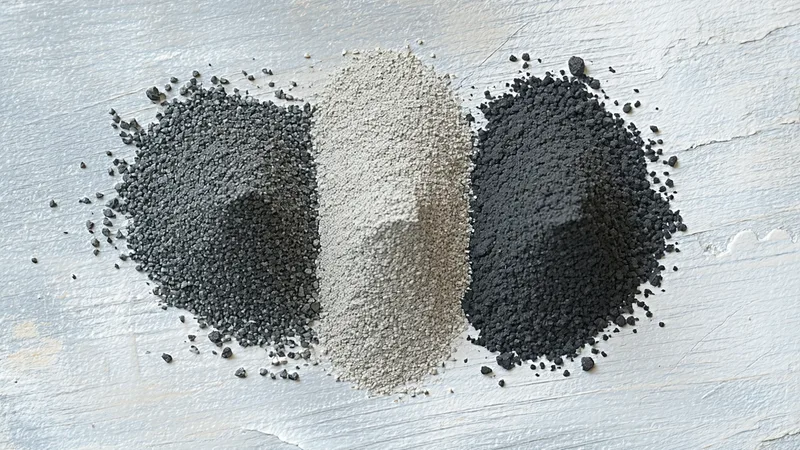
Every low-carbon concrete mix design conversation eventually arrives at the same set of materials: fly ash, slag, calcined clays. These supplementary cementitious materials are the primary levers available to concrete mix designers trying to reduce clinker content without fundamentally reengineering the concrete supply chain or accepting large performance compromises. But each SCM is not a simple clinker substitute — each carries distinct reactivity kinetics, processing requirements, availability constraints, and durability trade-offs that must be understood before they can be specified confidently. This is a working guide for engineers who need to move past headline carbon numbers toward specification-ready mix design decisions.
Fly Ash: High Potential, Changing Availability
Class F fly ash — a siliceous byproduct from bituminous coal combustion — is the most widely used SCM in North American concrete production. Its pozzolanic reactivity arises from amorphous aluminosilicate glass that reacts with calcium hydroxide (portlandite) released during cement hydration, producing additional C-S-H gel that refines pore structure and reduces permeability over time. ASTM C618 governs specification requirements, distinguishing Class F (low calcium, primarily pozzolanic) from Class C (higher calcium, which is both cementitious and pozzolanic).
Fly ash contributes well-understood durability benefits at moderate substitution rates (typically 15–35% by mass of total cementitious content). Chloride permeability as measured by ASTM C1202 (RCPT) decreases substantially with fly ash inclusion — the pore structure refinement effect becomes increasingly significant at 56-day testing and beyond, which is why Class F fly ash specifications should require 56-day strength and permeability results, not just 28-day. The delayed strength development is a legitimate operational constraint in time-constrained applications: a fly ash mix targeting 35 MPa at 28 days may reach only 25–28 MPa at 7 days, which affects formwork stripping schedules and early traffic loading decisions.
The availability challenge is real and growing. The US coal generation fleet has retired roughly 100 GW of coal capacity since 2010, with continued retirements projected. Some fly ash sources have shifted to stockpile-sourced material (processed from legacy ash ponds), which requires additional quality verification — variability in loss on ignition (ASTM C618 Table 1 limit: 6% for Class F) and particle size distribution is higher in stockpile ash than in current-production ash. Regional availability mapping is now a necessary early step in fly ash specification.
Ground Granulated Blast-Furnace Slag: Latent Hydraulic Reactivity
GGBS (ASTM C989, Grade 80/100/120) is a latent hydraulic material — it requires alkaline activation from Portland cement hydration to develop its cementitious properties. Unlike fly ash, slag reacts directly with water under alkaline conditions rather than relying on pozzolanic reaction with portlandite, which affects both the reaction kinetics and the products formed. Slag hydration generates C-S-H gel with a higher aluminum substitution than Portland cement-derived C-S-H, contributing to improved resistance to sulfate attack and chloride binding.
Substitution rates for GGBS in structural concrete typically range from 30% to 70% by mass of total binder, with high-slag mixes (50–70%) used specifically for low-heat mass concrete applications (dams, mat foundations) and for aggressive sulfate exposure environments. The heat-of-hydration reduction is significant: a 50% slag mix typically reduces peak adiabatic temperature rise by 25–35% compared to a 100% OPC mix at equivalent cementitious content, which directly reduces thermal cracking risk in massive elements.
The practical constraints are worth understanding clearly. Slag activates slowly at low temperatures — below approximately 10°C, slag reactivity is substantially reduced and early-age strength development is impaired. Cold-weather concrete placements in Northern climates require either heated materials/enclosures or reduced slag substitution rates during winter months. Higher slag substitution also increases plastic shrinkage sensitivity in some mix configurations due to extended setting time — worksite conditions affecting evaporation rate (temperature, wind, humidity) become more critical to manage. These are manageable constraints, but they need to be accounted for in the specification rather than discovered during construction.
Calcined Clays: The Manufactured SCM with a Long Supply Chain
Calcined clays — particularly metakaolin (calcined kaolinite, Al₂Si₂O₅(OH)₄ → metakaolin at 600–800°C) — represent a third SCM category with different supply chain characteristics than either fly ash or slag. Rather than being a byproduct of another industrial process, calcined clay is a manufactured material produced intentionally from raw kaolin or mixed clay minerals. This gives it supply chain independence from the power and steel sectors, which is increasingly valued as fly ash availability declines and as steel production geography shifts.
Metakaolin's pozzolanic reactivity is among the highest of the established SCMs, particularly in early-age strength development — a distinguishing characteristic from fly ash and slag, which both show delayed strength gain. At substitution rates of 10–20% by mass of cement, metakaolin can maintain or improve 7-day compressive strength relative to 100% OPC mixes, while also contributing to long-term pore structure refinement and durability enhancement. The combination of acceptable early strength and durability improvement is why metakaolin is being evaluated seriously for applications where fly ash cannot be used due to availability or performance constraints.
The cost differential is the significant constraint: calcined clay currently commands a substantial premium over fly ash and in many markets over GGBS. Calcination energy, though lower per tonne than Portland clinker production (calcination temperature ~700°C vs. ~1450°C), is still a cost and carbon input. Life cycle carbon calculations for calcined clay-based blends are more sensitive to the energy source used for calcination than is the case for byproduct SCMs — a calcination facility powered by grid electricity with high coal content presents a very different carbon profile than one using natural gas or renewable energy. Specifiers evaluating calcined clay products should ask for plant-specific EPD data rather than relying on generic metakaolin carbon factors.
Ternary and Quaternary Blends: Combining SCMs for Performance
The most sophisticated low-carbon mix designs are not simple binary OPC/SCM systems but ternary or quaternary blends that combine SCMs to capture complementary benefits. A well-established combination is Portland cement + GGBS + silica fume, where slag provides bulk clinker replacement and silica fume provides particle packing enhancement and early-age strength recovery. The LC3 concept (limestone calcined clay cement), developed through collaborative research published by EPFL and other institutions from around 2015 onward, uses calcined clay plus ground limestone to achieve 50% clinker replacement while maintaining acceptable performance — the limestone and calcined clay interact synergistically through a filler reaction mechanism that would not operate with either SCM alone.
Ternary blends add complexity to mix design optimization: the reactivity interactions between multiple SCMs and Portland cement hydration are not simply additive, and optimization typically requires iterative trial batching rather than calculation from single-SCM data. The mix design resource investment is higher. The payoff — in both carbon reduction and durability — can be substantially higher than binary systems operating near their substitution rate limits.
What Mix Design Engineers Need to Know About SCM Reactivity Testing
ASTM C311 (sampling and testing fly ash and raw or calcined natural pozzolans) and ASTM C1202 (RCPT) are the standard go-to methods in North American specifications. But they have well-known limitations for SCM evaluation: RCPT is sensitive to electrical conductivity as well as permeability, which can produce misleading results for high-alkali or slag-containing mixes. ASTM C1202 supplemental guidance and alternative methods (ASTM C1760 bulk diffusion, NT Build 492 migration test) are increasingly used for SCM-rich mix characterization in durability-critical applications.
The R3 (reactivity of supplementary cementitious materials) test method — developed by a RILEM/industry consortium and being evaluated for ASTM adoption — provides a more direct measure of SCM reactivity than the strength activity index approach in ASTM C618. For mix design engineers working with unfamiliar or variable SCM sources, the R3 test can provide early-stage screening data that helps narrow the mix design space before full trial batching.
We're not arguing that existing ASTM SCM standards are inadequate for most applications — they are well-established and broadly applicable. We are noting that as SCM sources diversify (more stockpile ash, more calcined clay, more novel byproducts), the importance of supplementing standard compliance testing with reactivity characterization appropriate to the specific SCM source is increasing. Carbon-optimized mix design is only as durable as the SCM characterization it's built on.
Dosage Rate Decisions: Where Carbon Reduction and Durability Can Diverge
There is a tendency in low-carbon specification discussions to push SCM substitution rates as high as possible. This is understandable from a carbon reduction standpoint but requires careful handling from a durability standpoint. Above approximately 40% slag substitution, the cold-weather workability constraints noted earlier become increasingly restrictive. Above approximately 30% Class F fly ash substitution, early-age strength development may require attention in freeze-thaw-exposed placements where early freezing of still-hydrating concrete is a risk. Above approximately 15–20% metakaolin, water demand increases sharply, requiring superplasticizer dosage adjustment and tighter water control to maintain target w/cm.
The sweet spot for SCM substitution — the zone where carbon reduction is meaningful and durability performance is not compromised — is application and climate specific. A 50% GGBS mix may be entirely appropriate for a mat foundation poured in July in a heated enclosure; the same specification for an exposed parking deck slab poured in October in Minnesota requires a very different look. The specification should define SCM substitution rate ranges rather than point values, with seasonal limits and pour size triggers that account for the actual conditions under which the concrete will be placed.