Why Concrete Cracks — And What It Really Costs Infrastructure Owners
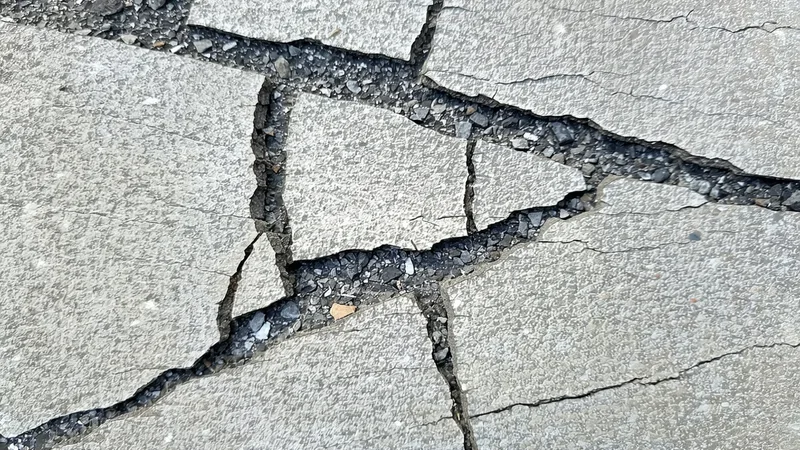
Every concrete structure cracks. That sentence tends to unsettle clients who've just watched a deck pour finish perfectly smooth, but it's the honest starting point for any serious conversation about concrete durability. Cracking is not a sign of workmanship failure — it is a predictable consequence of the material's thermomechanical properties, and it is explicitly accounted for in ACI 318 and similar design standards through crack width limits rather than crack elimination targets. The question infrastructure owners rarely ask at specification time is: what happens next?
The Mechanics of Expected Cracking
Portland cement concrete shrinks as it hydrates. Autogenous shrinkage — the self-desiccation driven by cement hydration consuming capillary water — typically begins within the first 24 hours of placement. Drying shrinkage follows over weeks and months as moisture migrates outward. Thermal gradients during curing, particularly in mass concrete elements, add a third source of early tensile stress. When any of these stresses exceed the tensile strength of the young matrix — which in ordinary concrete runs roughly 8–12% of compressive strength — micro-cracks initiate.
Under service loads, those micro-cracks widen and, in bridge decks, parking structures, and retaining walls, they do so cyclically. A bridge deck in a northern climate experiences hundreds of freeze-thaw cycles annually, each one acting as a wedge inside existing crack planes as water freezes and expands by approximately 9% in volume. Chloride ions — from deicing salts or marine exposure — migrate preferentially through crack paths rather than through the intact paste matrix, reaching rebar depths that would take years to penetrate through diffusion alone. Carbonation fronts advance faster along connected crack networks. What started as a 0.2 mm surface crack, well within the ACI 318 permissible limit of 0.33 mm for mild exposure, becomes a corrosion initiation site within a few winter seasons.
The Mobilization Cost Nobody Budgets
Infrastructure owners and DOTs typically budget for scheduled rehabilitation at design-life endpoints — 50-year deck replacement cycles, for instance. What's underweighted in those lifecycle models is the cost of reactive mobilization triggered by each deterioration event before that endpoint.
Consider a hypothetical scenario representative of the Northeast US bridge inventory: a state DOT manages a portfolio of roughly 400 deck structures, of which 15–20% require at least one unscheduled crack-repair intervention before the 25-year mark. Each intervention involves bridge inspection, traffic management setup, hydrodemolition or saw-cutting, patching material procurement, and placement crew mobilization. Even for a relatively minor repair campaign, mobilization costs — crew travel, equipment positioning, traffic control — can account for 40–60% of the total repair invoice before a single unit of material is placed. The direct material cost is almost secondary.
Multiply that across a state portfolio, add the indirect cost of vehicle delay and increased emissions from congestion during lane closures, and the lifecycle cost picture looks very different from what's captured in an initial specification decision based on compressive strength and unit price per cubic yard.
Where Crack Width Limits Fall Short as a Design Metric
ACI 318 crack width limits were calibrated primarily for structural serviceability — to prevent aesthetically objectionable cracking and to limit rebar corrosion risk in normal exposure environments. They were not calibrated for the self-reinforcing deterioration cascade that occurs in high-chloride, freeze-thaw environments where cracks are entry points rather than isolated flaws. The permissible 0.33 mm limit in Class 1 exposure conditions may be perfectly adequate for an interior slab, and demonstrably insufficient for a bridge deck abutment in a coastal mid-Atlantic or Great Lakes climate.
We're not saying crack width limits are wrong — they remain a necessary and useful design tool. We are saying that specifying to compliance minimums, without accounting for the environment-specific deterioration pathway that opens up once cracking occurs, is where lifecycle cost surprises tend to originate.
The more useful question to ask at specification time is: if this element cracks to the permitted limit, what is the deterioration trajectory over the next 10 years given the actual exposure class? That question forces a more honest durability conversation than "does the mix pass the compressive strength requirement at 28 days."
The Rebar Corrosion Chain
The most expensive consequence of crack-enabled chloride penetration is not the crack itself but the corrosion damage it enables. Once chloride concentrations at the rebar surface exceed a threshold — commonly cited in the literature as around 0.4% by weight of cement for ordinary mild steel — a depassivation event occurs. The iron oxide passive layer that protects rebar in the highly alkaline concrete environment breaks down. Corrosion products occupy 3–6 times the volume of the original steel, generating internal expansive stress that can reach 30–40 MPa — well above the concrete's tensile capacity — leading to spalling, further crack widening, and delamination. By the time spalling is visible, the underlying damage has typically been progressing for years.
Epoxy-coated rebar, stainless rebar, and cathodic protection systems address this pathway at the rebar level, which is effective but expensive and not universally specified. The alternative — or complementary — lever is to limit the rate at which chloride reaches rebar depth in the first place, which is where crack self-healing and low-water-to-binder matrix densification operate.
Rethinking the Specification Moment
The specification moment — when material choices are locked for a project — is also the last practical point at which the crack-to-deterioration pathway can be interrupted by design. Once a structure is placed, crack remediation is reactive by definition. Specifiers who consider only 28-day strength and initial pour economics at that moment are leaving the most consequential cost variables uncontrolled.
The materials science required to reduce crack formation (shrinkage-reducing admixtures, fiber reinforcement, lower water-to-cementitious-materials ratios, appropriate SCM substitution) and to enable crack closure when cracking does occur (crystalline admixtures, expansive cement, gel-based self-healing chemistry) is well understood. The challenge is not technical feasibility — it's that the costs of inaction are borne later, often by a different budget owner than the one making the initial specification decision.
Infrastructure owners who control both capital and maintenance budgets are positioned to capture the full lifecycle benefit of specifying for durability rather than minimum compliance. For them, the question "why does concrete crack?" is less interesting than "what does each crack actually cost us over 30 years?" The arithmetic tends to shift material decisions significantly.